


Happy with the purchase
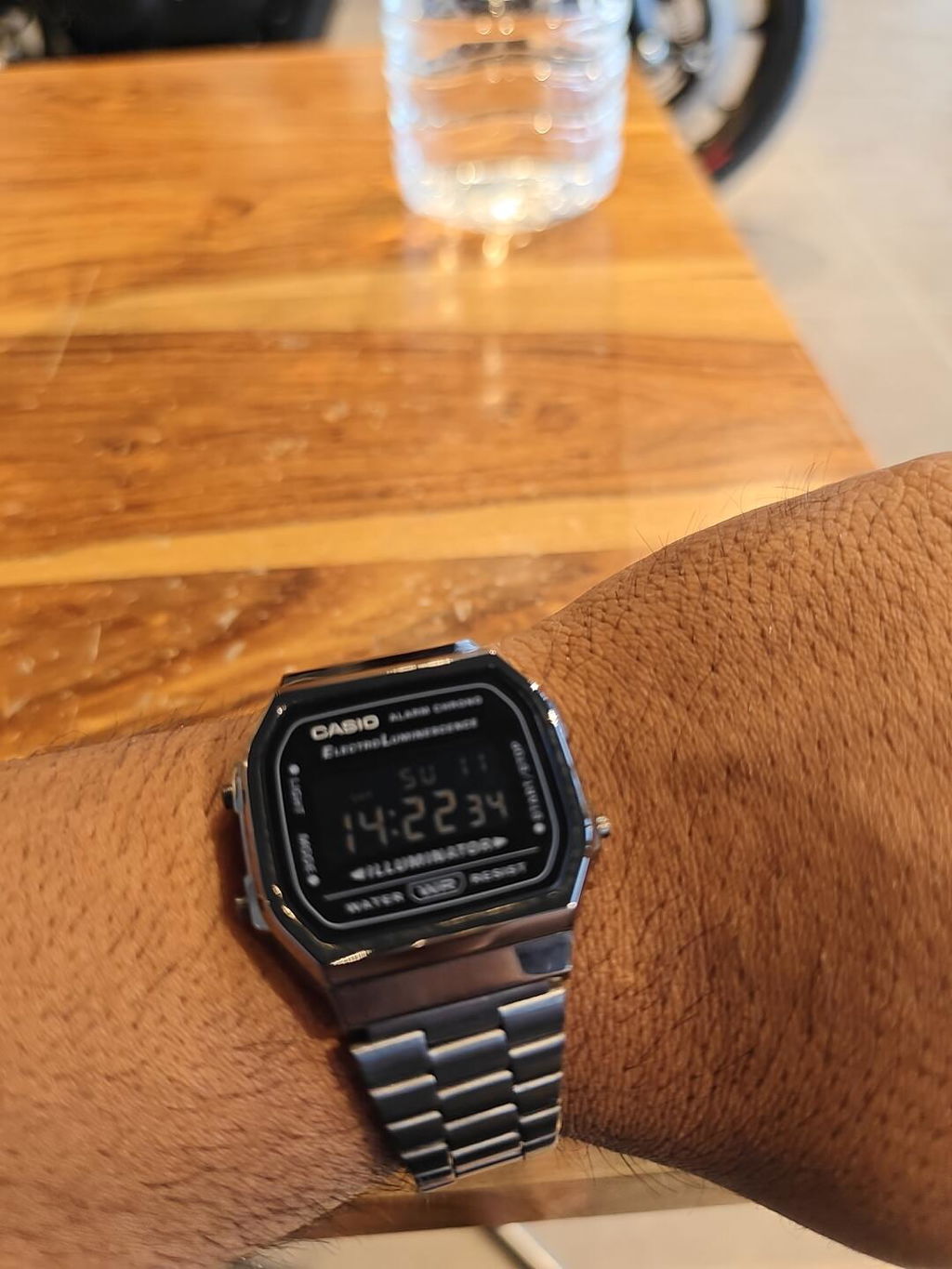
The glass has scratches on it. No major ones, but still evident.


New

New

New

New


Trending


Trending

sale

Exclusive


Discount on Prepaid Order
2 Days Returns Policy
In-Store Servicing Available
GETTING A BETTER PRICE?
Now compare prices at Just In Time, speak with our team to get the best price for your watch.
We want to make sure that we deliver the best value to our customers.
If you've found a better price, please fill out the form below.
Want to check availability at store? FIND STORE



Both classic and contemporary, Casio's watch LTP1165A-4C gets its professional, polished look from the stainless steel bezel, crown and case. It also boasts the accuracy of a quartz movement, is water resistant to 99 feet and has a mineral crystal to protect it from scratches. Silver-tone hands and indices on a bright pink dial instantly charm, while a stainless steel case back helps provide durability for long-term wear. Perfect for the office or dress ensemble, the streamlined design of this Casio Original looks both sleek and feminine on the wrist. The Casio Story With the launch of its first timepiece in November 1974, Casio entered the wristwatch market at a time when the watch industry had just discovered digital technology. As a company with state-of-the-art electronic technology developed for pocket calculators, Casio entered this area believing it could develop timepieces that would lead the market. In developing their own wristwatches, Casio began with the basic question, What is a wristwatch? aspects in a consistent manner. Based on this, Casio was able to create a watch that displayed accurate time including second, minute, hour, day and month ?? not to mention morning or afternoon and the day of the week. Was the world's first watch with a digital automatic calendar function that eliminated the need to reset the calendar due to variations in month length. Instead of using traditional watch faces and hands, A digital liquid crystal display was adopted to better show all the information. This culminated in the 1974 launch of the Casiotron, the world's first digital watch with an automatic calendar. The Casiotron won acclaim as a groundbreaking product that represented a complete departure from the traditional wristwatch. Casio transformed the concept of a watch - from a mere watch into an information device for the wrist - and built a product plan based on this innovative idea. We not only developed timing functions such as global time zone clocks, but also developed other radical new functions using Casio's own digital technology, including calculator and dictionary functions, as well as a phonebook feature based on memory technology and Even a thermometer function using a built-in sensor. Memory-function watches became our data bank product series, While sensor watches evolved into the two unique Casio product lines we see today: the Pathfinder series displays altitude, atmospheric pressure, and compass readings. In 1983, Casio launched the shock-resistant G-Shock watch. This product shattered the notion that a watch is a delicate piece of jewelry that needs to be handled with care and was the result of Casio engineers taking on the challenge of creating the world's toughest timepiece. Using a triple-protection design for parts, modules and case, the G-Shock offered a radical new type of watch that was unaffected by strong impacts or shocks. Its practicality was quickly recognized and its unique form, which embodied its functionality, became wildly popular, resulting in explosive sales in the early 1990s. G-Shock soon introduced various new sensors, Adopted solar-powered radio-controlled technology (described below) and new materials for improved durability. Always employing the latest technology and transcending conventional thinking about timepieces, the G-Shock has become the flagship timepiece product of the brand Casio. Today, Casio is focusing its efforts on solar-powered radio-controlled watches: the built-in solar battery eliminates the fuss of replacing batteries and the radio-controlled function means users never have to reset the time Is. In particular, the radio-controlled function represents a revolution in time-keeping technology similar to the effect produced when mechanical watches gave way to quartz technology. Through further developments of higher radio-wave sensitivity, miniaturization and improved power efficiency, Casio continues to produce a full range of radio-controlled models
You should notify our team with the receipt of a damaged or defective product or in scenarios where the product is entirely different from what was purchased online or if the package delivered is missing any accessories within the period mentioned in the returns policy., Click Here to know more about the returns & refund policy.
Manufactured By
Casio India Co. Private Limited
A-41, First Floor, Mohan Cooperative Industrial Estate, Mathura Road, New Delhi - 110044
Imported By
Casio India Co. Private Limited
A-41, First Floor, Mohan Cooperative Industrial Estate, Mathura Road, New Delhi - 110044
Country of Origin
China


Share your mobile number so we can alert you the moment this product becomes available again. No spam—just a quick heads-up!
We've saved your number and will notify you as soon as the product is back in stock.
Stay tuned!
Add your favourite watch accessory to your purchase


ABOUT THE BRAND


Finding the perfect watch was a breeze thanks to their huge collection from timeless classics to stylish modern pieces. The staff were incredibly helpful in guiding me toward the right choice, and the delivery arrived right on time. Great experience overall and will shop again!

Great experience! The team was professional and the service was quick.I'm very happy with the service! The battery change was quick, and the polishing made my watch look brand new again. The team was efficient & professional. I'll definitely be returning for future services!

Amazing service quality. Will definitely come back!I'm very happy with the service! The battery change was quick, and the polishing made my watch look brand new again. The team was efficient & professional. I'll definitely be returning for future services!

From placing the order online to receiving it right at my doorstep everything was smooth and fast. The packaging was secure, the product was exactly as shown, and the customer support stayed in touch until delivery. Truly a premium service experience!

Just In Time has an amazing collection of watches across top brands. The staff helped me understand the features and made the buying process smooth and comfortable. Delivery was quick, and the watch arrived perfectly packed. Very reliable service!

I ordered my watch online and the entire experience was seamless. From browsing the wide range of brands to quick delivery and timely updates, everything was well managed. The customer support team was responsive and helpful throughout.

